- Bio-LNG Wilp proves that decentralised, small-scale biogas liquefaction is technically mature and commercially viable.
- Nordsol’s iLNG process integrates upgrading and liquefaction in a compact unit, achieving zero methane slip and high-purity bio-LNG.
- EU Innovation Fund support through CINEA provides a framework for documenting and sharing results with the wider industry.
- Lessons from Wilp reduce commissioning risk and improve yield performance for future decentralised bio-LNG plants.
- Flexible offtake strategies are essential as regulatory and market conditions for bio-LNG continue to evolve.
Demonstrating viable small-scale bio-LNG:
the Bio-LNG Wilp project
Artikeldetaljer
A commercial reference for decentralised bio-LNG production.
This article was also published in LNG Industry, April 2026
An important question for the transport sector is whether bio-LNG production can be scaled to meet growing demand. To achieve this, as much local waste as possible needs to be converted into biogas and then into bio-LNG. Many existing biogas plants are relatively small, located close to waste sources, and not always connected to the gas grid. Decentralised liquefaction directly at these sites makes it possible to move energy to offtakers via the LNG value chain and helps prevent existing biogas assets from becoming stranded.
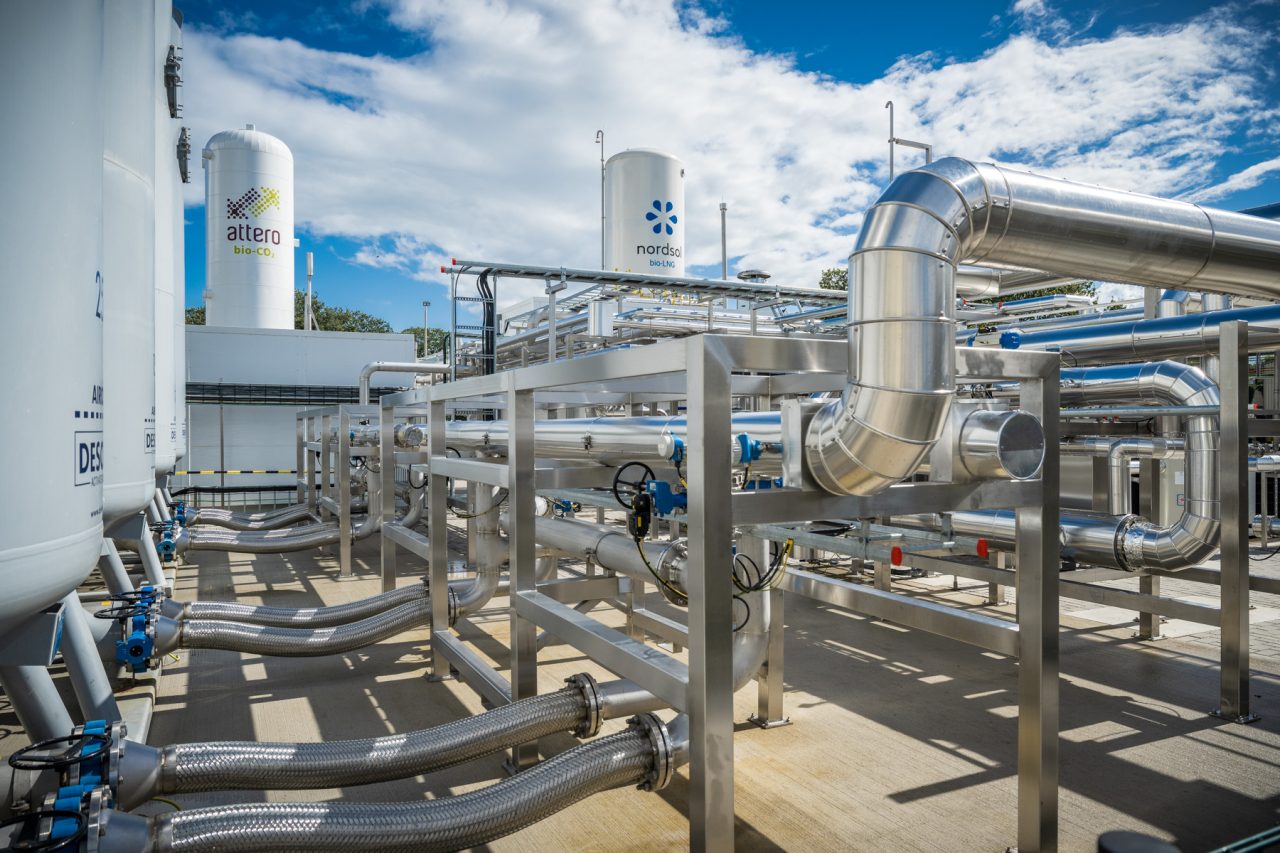
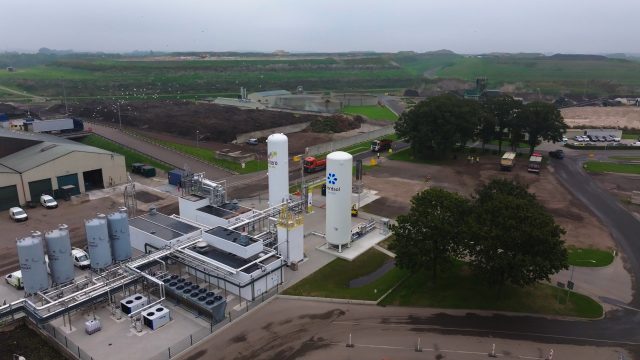
The Bio-LNG Wilp plant in the Netherlands is an example of this approach. It is a commercial bio-LNG facility located at Attero’s existing waste processing and biogas site in Wilp. The project involves three key organisations: Nordsol, as technology developer and owner–operator of the liquefaction unit; Attero, as waste processor, biogas producer, and owner–operator of the biogas upgrading and CO₂ liquefaction units; and the European Climate, Infrastructure and Environment Executive Agency (CINEA), who manages the Innovation Fund, a programme financed by the EU Emission Trading System revenues supporting the project. Attero and Nordsol have implemented a small-scale liquefaction concept tailored to distributed biogas sites, creating a reference plant for decentralised bio-LNG production.
Technology objectives
The process used at Wilp is based on Nordsol’s iLNG process design. It was developed specifically for small-scale, decentralised applications, rather than as a scaled-down version of large LNG plants. The main objectives of the iLNG process are:
- to reduce specific energy consumption through process integration;
- achieve high methane recovery with zero methane vent;
- maintain a compact, modular footprint suitable for industrial and agricultural biogas sites;
- minimise equipment count and apply a continuous process, without heat requirement
- ensure that automation, operability, and maintenance meet the requirements of biogas producers as well as bio-LNG off-takers.
Core process architecture
The iLNG process converts raw biogas into two main products: bio-LNG and high-purity biogenic liquid CO₂. Biogas from anaerobic digestion typically contains methane, CO₂, water vapour, hydrogen sulphide (H₂S), and traces of volatile organic compounds (VOCs). The process begins with dehumidification and removal of H₂S and VOCs to protect downstream equipment, meet LNG quality specifications, and ensure stable operation.

After pre-treatment, the bulk of the CO2 is removed by a standard biogas-to-biomethane upgrading unit. Subsequently, the remaining CO₂ and traces of water are separated from the biomethane using membranes only. Patented flash-2-sweep™ technology improves the performance of the last membrane stage by a factor of 20, creating liquefaction-ready biomethane. Flash-2-sweep boosts membrane performance by sweeping the low-pressure permeate side with flash gas and boil-off gas (BOG) from the liquefaction unit. The permeate is routed back to the biogas compressor, preventing any loss of biomethane.

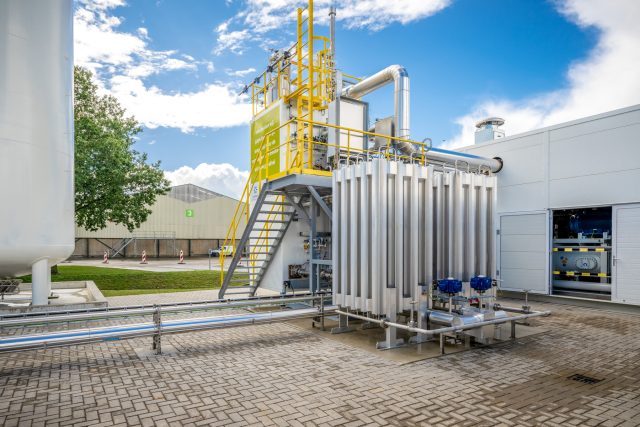
The biomethane is liquefied in a cryogenic section that uses a reverse Brayton cycle based on methane gas expansion through a single turbo expander. It is a simplified version of the efficient AP-C1 process developed by Air Products4. The process uses treated biomethane as the refrigerant, rather than nitrogen, which makes it particularly efficient in the required temperature range.
CO₂ in the biogas is captured and liquefied as a high-purity product rather than vented, improving the emissions profile and enabling reuse in industrial or horticultural applications where markets exist. Biogenic CO2 will also serve as the feedstock for synthetic fuels, such as SAF or e-methane.
By integrating upgrading and liquefaction in this way, the iLNG process concentrates functionality into a compact package with low equipment count, suited to distributed biogas facilities.

Bio-LNG Wilp is the outcome of a cooperation that brings together technology, feedstock, and public support.
Nordsol developed the iLNG concept and owns and operates the biomethane liquefaction unit at Wilp. Its responsibilities include process design from biogas to bio-LNG, equipment specification, and operational control of the flash-2-sweep and liquefaction process, as well as truck loading. Attero operates the Wilp waste processing site, which includes anaerobic digestion of organic waste to produce biogas. Attero owns and operates the biogas upgrading and CO₂ liquefaction units at the site.
CINEA, the European Climate, Infrastructure and Environment Executive Agency, supports the project through the Innovation Fund, the programme that aims to accelerate the deployment of low-carbon technologies. CINEA contributes with financial support and monitors progress and results for potential replication.
nästa stora steg
Från teknisk expertis till operativt stöd vi vägleder dig i varje steg.
Låt oss utforska tillsammans. Gör vårt snabba test eller kontakta Rob redan nu.
Site context and project goals
The Bio-LNG Wilp plant is located within Attero’s existing waste treatment facility near Wilp in the Netherlands. This facility processes municipal organic waste streams, producing biogas through anaerobic digestion. Before the bio-LNG plant was built, this biogas was used for combined heat and power generation. With the addition of the liquefaction unit and CO₂ handling, the site can now also supply bio-LNG and liquid biogenic CO₂.
At the project level, the main goals at Wilp are to convert locally produced biogas into bio-LNG, capture and liquefy CO₂ as a co-product to improve the overall carbon profile, operate on a continuous basis under real industrial conditions, and integrate production directly into existing LNG logistics via on-site storage and truck loading.
The plant is additionally configured to inject upgraded biomethane into the natural gas grid, offering an alternative utilisation route for the site’s biogas. The existing CHP units also remain available. The required heat for the digesters is supplied by a new heat pump, which increases the temperature of the heat rejected from the biogas upgrading unit.
Plant configuration, implementation, and commissioning
At Wilp, the standardised iLNG concept is implemented in a configuration adapted to the local site. Annually, 6 million m³ of biogas is converted into 2.4 kilotonnes (or 35 GWh) of bio-LNG and 5 kilotonnes of biogenic liquid CO₂. This capacity falls within the range of typical production capacities of biogas plants (10 – 100 GWh). The bio-LNG is stored on-site in a cryogenic tank and loaded onto trucks for distribution to LNG filling stations, while upgraded biomethane can also be directed to the gas grid.
Implementing the plant at an operating waste site required careful integration and phasing. The layout and tie-ins were designed to fit within an existing industrial complex, respecting safety regulations and traffic flows. Construction was carried out alongside ongoing waste processing and biogas production, with coordination to manage access, minimise disruption, and perform tie-ins safely. Commissioning progressed from non-cryogenic systems to full cool-down and LNG production, followed by CO₂ liquefaction. CINEA’s involvement provided a framework for documenting progress and sharing findings with a wider audience interested in similar decentralised liquefaction projects.
Operational performance and technology validation
Operation at Wilp has shown that decentralised liquefaction of upgraded biogas can continuously produce bio-LNG with a very high (>99%) methane content. Despite variability in feedstock composition and flow, the combined upgrading and liquefaction chain has been able to produce a consistent bio-LNG product that more than meets offtaker specifications.
The plant runs as a commercial installation, with planned maintenance and optimisation typical of early years of operation. This has provided data on availability, maintenance intervals, and the practicalities of operating cryogenic equipment at a waste site. By capturing CO₂ and focusing on high methane recovery and zero methane slip, the plant demonstrates how decentralised biogas liquefaction can contribute to reducing GHG emissions today. Overall, Wilp provides operational evidence that a compact, integrated liquefaction plant can function reliably at a scale and in a setting typical of many European biogas producers.
Technology and production lessons
As with most first commercial applications of a new process, the Wilp plant experienced several early “child diseases” that have since been resolved and have contributed to design improvements.
In early operation, the turbo expander in the cryogenic section exhibited vibration levels that could cause trips. Through adjustments to design details, operating conditions, and start-up & shutdown sequences, the expander performance was stabilised. Future plants can incorporate these modifications from the beginning.
The plant’s ability to inject upgraded biomethane into the gas grid depended on interface conditions with the national grid. In practice, the pressure difference at the connection point was smaller than originally indicated, necessitating changes in the design and operation of the grid injection system. The experience underlines the importance of conservative assumptions and rigorous verification of external interface data for decentralised plants.
Hydrogen present in the biogas does not end up in either the bio-LNG or CO₂ products. Therefore, the hydrogen stream, which also contained methane, was used to fuel the flare pilot. However, this stream contained too much methane, leading to unnecessary carbon emissions and lower bio-LNG yield. Installing a dedicated membrane to recover methane from the hydrogen stream resolved this issue: the recovered methane is returned to the process, while the hydrogen can still be used for the pilot flame.
These experiences confirm that a thorough analysis of operational data is essential for tuning a new decentralised process and can rapidly translate into improvements for subsequent projects.
Market and regulatory lessons
The Wilp project also offers insights into market and policy dynamics for bio-LNG. At the time of the investment decision, the regulatory framework for bio-LNG – including certification rules and support mechanisms – was still evolving. This created uncertainty about which end-use segments would be most attractive over the plant’s early life. While the plant was conceived with both road and maritime transport in mind, current conditions have made the maritime sector less attractive as an outlet for Wilp’s production than initially expected. At present, the bio-LNG is used in Dutch heavy road transport. This experience highlights the value of flexible offtake strategies and the need to track regulatory developments closely when planning new decentralised liquefaction projects.
Implications for future small-scale bio-LNG developments
The main implications from Wilp for future decentralised liquefaction projects are clear. Future plants will benefit from operational data and optimisations in Bio-LNG Wilp, reducing commissioning risk and improving yield and emissions performance from the beginning. Detailed, site-specific verification of external conditions is essential.
Biogas producers with liquefaction plants can serve multiple market segments (road transport, maritime, and grid injection) and are therefore better positioned to navigate rapidly evolving regulatory and market conditions.
Plants such as Wilp show how decentralised liquefaction can complement centralised infrastructure. By converting biogas directly at the source into bio-LNG and CO₂, these facilities can feed into existing LNG supply chains while also unlocking additional value from waste and agricultural streams.
Bio-LNG Wilp illustrates how decentralised, small-scale biogas liquefaction to bio-LNG is technically mature, commercially viable, and ready for upscaling to a larger number of implementations across Europe. By combining Attero’s waste and biogas operations with Nordsol’s bio-LNG technology, and with support from CINEA through the Innovation Fund, the project has created an operational reference for onsite bio-LNG production.
Early operational experience has led to concrete technical refinements and has clarified how regulatory and market conditions influence the allocation of bio-LNG between transport segments. The Wilp case demonstrates that decentralised liquefaction can produce bio-LNG in a compact footprint, integrated directly into existing LNG logistics. As similar plants incorporate the lessons learned at Wilp, decentralised bio-LNG production can be scaled up rapidly and contribute to the decarbonisation of heavy transport across Europe.
- Nordsol, “Bio-LNG Wilp,” project case description, available at: https://nordsol.com/cases/wilp/
- Nordsol, “Nordsol’s iLNG process,” technology overview, available at: https://nordsol.com/articles/nordsols-ilng-process/
- European Climate, Infrastructure and Environment Executive Agency (CINEA), official information on EU-supported alternative fuels and bio-LNG projects, available at: https://cinea.ec.europa.eu/
- Air Products, “Leave refrigerants out in the cold”, in LNG Industry, October 2021
Disclaimer: “Funded by the European Union. Views and opinions expressed are however those of the author(s) only and do not necessarily reflect those of the European Union or the European Climate, Infrastructure and Environment Executive Agency (CINEA). Neither the European Union nor the granting authority can be held responsible for them”
The Bio-LNG Wilp project is a commercial bio-LNG facility at Attero’s waste processing site in Wilp, the Netherlands, where Nordsol’s liquefaction technology converts locally produced biogas into bio-LNG.
Nordsol’s iLNG process works by integrating biogas upgrading and liquefaction in a single compact unit, using patented Flash-2-Sweep technology and a reverse Brayton cycle to produce bio-LNG with zero methane slip.
Other biogas producers can learn from Wilp that decentralised liquefaction is technically proven at commercial scale, and that early operational data directly translates into design improvements for future plants.
The technical challenges encountered at Wilp included turbo expander vibrations and methane loss through the hydrogen stream. Both were resolved through design adjustments and the installation of a dedicated membrane, with improvements now incorporated into future plant designs.
The Wilp project demonstrates that decentralised bio-LNG production is ready for upscaling, as plants built on lessons learned from Wilp can reduce commissioning risk and improve yield and emissions performance from the start.
Remco arbetar i skärningspunkten mellan teknik och marknadskommunikation. Driven av en passion för hållbarhet bidrar han med denna expertis till ett team som omsätter innovativa idéer i praktiska lösningar och visar vad energiomställningen inom transportsektorn redan kan åstadkomma.